
The Incrementality Shift: Moving from Attribution to True Causality Measurement
As CPG trade budgets demand higher accountability, Retail Media is naturally evolving from traditional attribution to real-time, automated incrementality. The networks that simplify this transition will capture the next wave of sustainable brand investment.
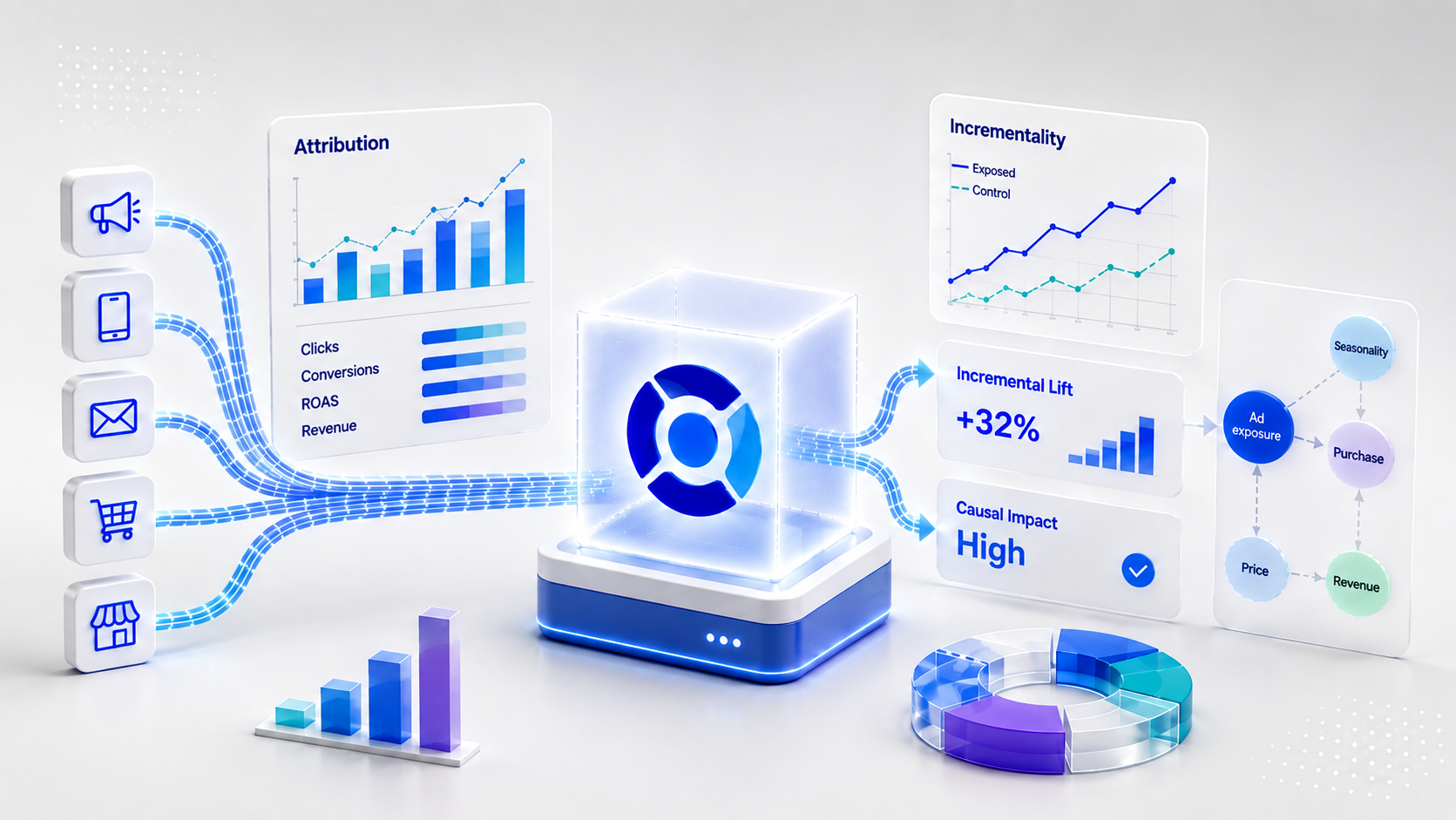
In the rapid expansion of first-party data monetization, the Retail Media industry naturally relied on the tools at hand: deterministic attribution models.
While closed-loop attribution provided a crucial first step in linking ad exposure to point-of-sale transactions, the market is entering a new phase of maturity. Brand decision-makers and CFOs are increasingly asking a more sophisticated question: How many of these sales were truly incremental, and how many would have occurred organically?
The Next Frontier in Brand-Retailer Collaboration
This shift isn't about pointing fingers at legacy metrics; it's about unlocking the next tier of CPG trade marketing budgets.
The Legacy Metric (Last-Touch Attribution): Useful for establishing a baseline connection between exposure and purchase, but naturally limited in isolating organic brand loyalty from campaign-driven lift.
The New Standard (Causal Measurement): Leveraging randomized control trials (A/B holdouts, geo-testing, and causal inference) to prove verifiable net-new revenue.
The Operational Challenge for Retail Networks
Most Retail Media Networks (RMNs) fully understand the strategic value of incrementality. The barrier has never been a lack of vision—it has been operational friction.
Running scientific incrementality testing traditionally requires heavy data science resources, custom clean-room setups, and weeks of manual post-campaign analysis. For both growing retailers and time-strapped brand teams, the technical complexity often makes regular incrementality testing unscalable. Furthermore, isolating true media impact requires crossing sales history with the standalone effect of in-store promotions (the promo baseline). Without an infrastructure capable of processing these commercial signals in real time, distinguishing between sales driven by on-shelf discounts versus digital ads remains guesswork.
True causality measurement cannot remain an expensive post-mortem project. To scale across hundreds of brands, incrementality must be automated, real-time, and embedded directly into the campaign execution pipeline.
The Orestico Perspective
Orestico helps Retail Media Networks upgrade their measurement capabilities without increasing headcount or technical complexity. Our Zero-Ops infrastructure feeds control groups and automated baseline sales modeling directly into Meta and Google ad pipelines. Rather than evaluating incrementality 30 days after the budget is spent, Orestico allows bidding algorithms to optimize delivery in real time specifically toward truly incremental conversions. Retailers can effortlessly provide CPG brands with transparent, mathematically proven incrementality at the SKU level—turning high-value measurement into a standard feature rather than an operational burden.
“Attribution shows who bought after seeing an ad; causal measurement proves what you would have never sold without it.”




Let's talk about your Retail Media strategy.
Book a call with the Orestico team to assess your retail media infrastructure and discuss next steps.